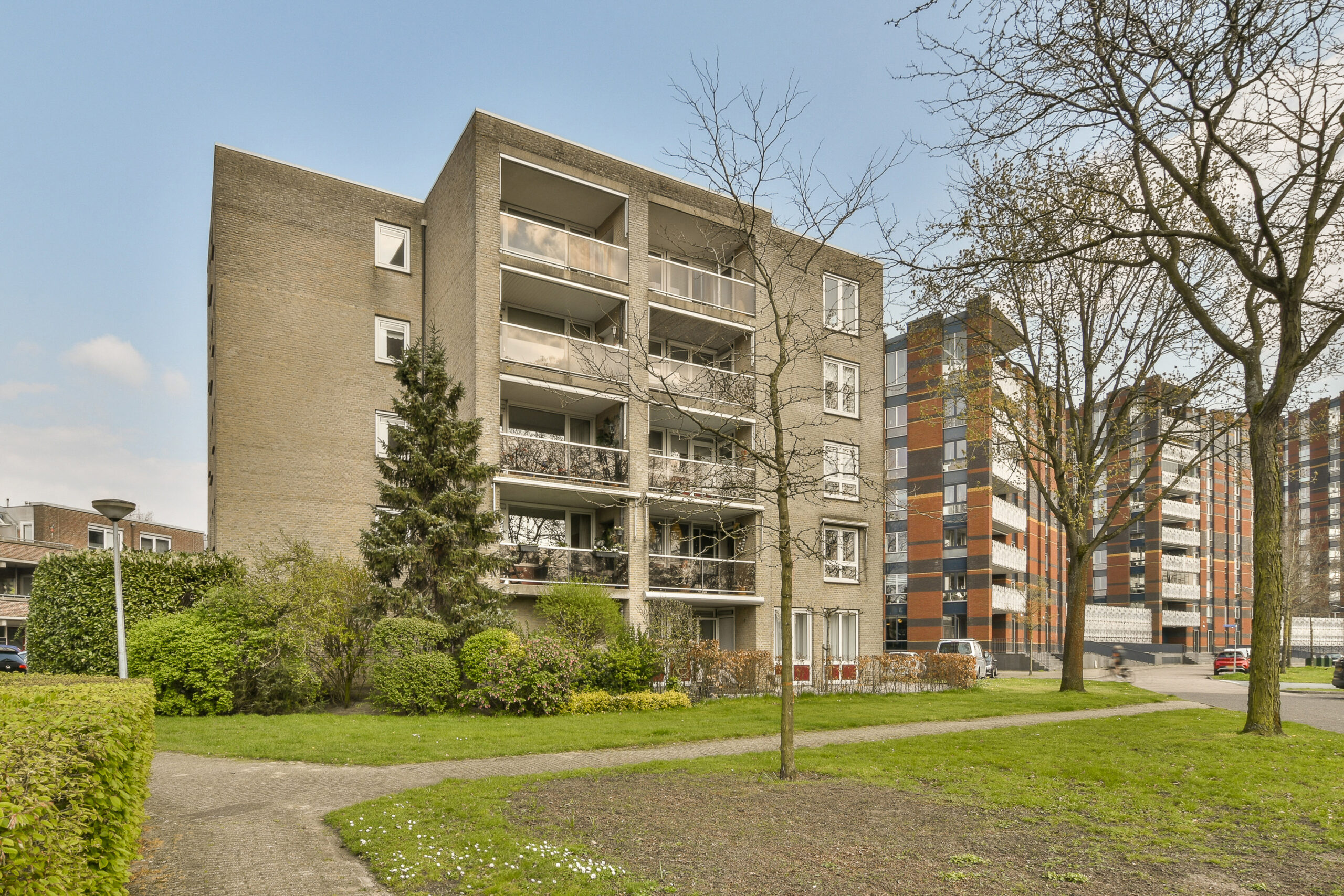

Navigating Internal Rate of Return (IRR) in Multifamily Investing
If Cash on Cash Return tells you how much an investment pays you each year, Internal Rate of Return (IRR) tells you how the entire deal performed — from day one through the final distribution. It’s the metric that sophisticated real estate investors and institutional funds use to compare opportunities, and it’s central to how Fourth Wall Capital evaluates every deal we underwrite.

What Is IRR?
Internal Rate of Return is the annualized rate of return that makes the net present value (NPV) of all cash flows from an investment equal to zero. In plain terms: it’s the single percentage figure that accounts for every dollar you put in, every distribution you received, and every dollar returned at sale — weighted by when each of those events occurred.
IRR incorporates the time value of money, which means a dollar received in Year 1 is valued more highly than a dollar received in Year 5. A deal that returns capital quickly will show a higher IRR than a deal with identical total profits spread over a longer timeline.
A Simplified Example
IRR Illustration
You invest $100,000. Over a 5-year hold, you receive $8,000 per year in distributions ($40,000 total), then $140,000 at sale (return of capital plus profit). Total cash returned: $180,000 on a $100,000 investment. The IRR on this deal — accounting for the timing of each payment — is approximately 14.8%. Simply dividing profit by years would give a different and misleading figure
Why Timing Matters So Much
- Two deals can return the same total dollars but have very different IRRs based purely on timing. If Deal A returns most of its profit in Years 1–2 and Deal B concentrates profits in Years 4–5, Deal A will have a higher IRR even if total dollars returned are identical. This is why IRR is the preferred metric for comparing deals with different hold periods, structures, and cash flow patterns

What Is a Strong IRR in Multifamily Syndications?
Target IRRs vary by deal type and market environment. As a general benchmark, value-add multifamily syndications have historically targeted IRRs in the 15–20% range. Core-plus or stabilized deals may target 12–15%. Deals projected above 20% warrant extra scrutiny of the assumptions. Below 12% may not adequately compensate for the illiquidity of the investment.
These benchmarks shift with interest rates and market conditions. In higher rate environments, the bar for what constitutes an acceptable IRR should be higher to compensate for the cost of capital.
Factors That Influence IRR
- Entry price: Overpaying for a property compresses IRR because appreciation from the acquisition price is reduced.
- Rental income growth: Strong rent growth expands cash flows over time and boosts the sale price, both of which raise IRR.
- Hold period: Shorter holds require the deal to perform quickly; longer holds allow more time for value creation but delay capital return.
- Exit cap rate: The cap rate at which the property sells has an enormous impact on IRR. A deal bought at a 5.5% cap but sold at a 6.5% cap due to market deterioration will underperform projections significantly.
- Financing: Leverage amplifies IRR in good conditions and destroys it in bad ones. Loan structure — fixed vs. floating rate, term length, prepayment flexibility — is a major IRR driver.
IRR vs. COC vs. AAR
These three metrics are complementary, not competing. COC tells you about annual cash income. AAR gives you a simple average of annual returns. IRR tells you the time-weighted performance of the entire investment.
At Fourth Wall Capital, we present all three — but IRR receives the most scrutiny in our underwriting because it captures what matters most: the full return on your capital over time, net of all costs.
Fourth Wall Capital's Approach
Our financial modeling — led by a partner with an actuarial background — stress-tests IRR assumptions rather than presenting a single optimistic projection. We model the base case, a downside scenario with higher vacancy and flat rents, and a stress case with forced exit. Investors see the range, not just the ceiling.
Ready to learn more?
Fourth Wall Capital brings an actuarial approach to multifamily investing — stress-testing assumptions so you understand the risk before you commit the capital. Visit fourthwall.capital/investing or contact us to start a conversation.